المدونة
ما نتعلمه
ملاحظات من الميدان: ما يقوله الطلبة، وما تطلبه جهات العمل، وما نغيّره بناءً على ذلك.
How to Run an Internship Program Your Team Won't Hate: A Playbook for UAE Companies
Five decisions to make before the first intern arrives, the UAE paperwork, a week-by-week plan, and the mistakes that make teams dread intern season.
في هذه الصفحة
1 The short answer
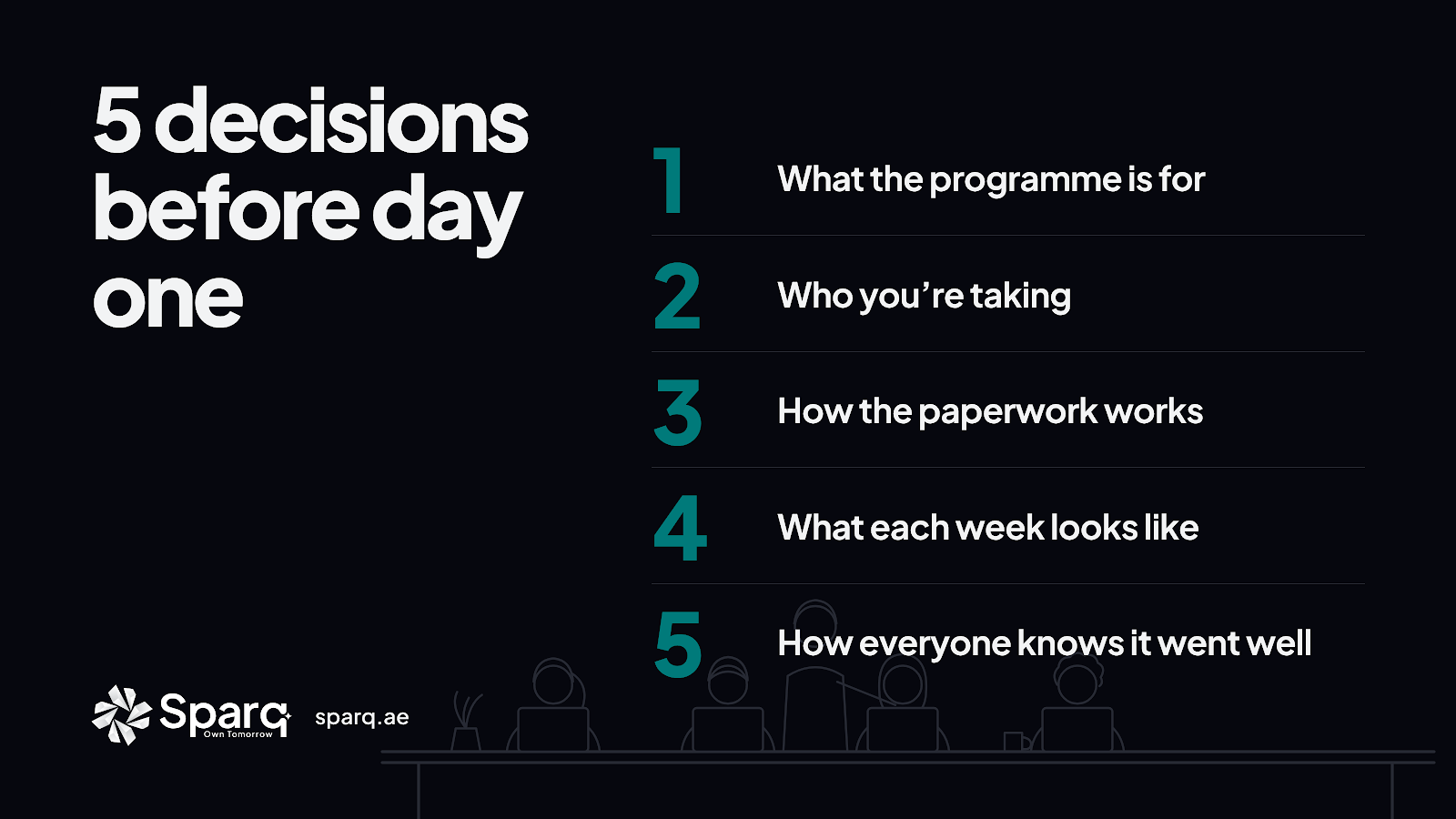
Most internship programmes don't fail because of the interns. They fail on admin: applications in someone's inbox, shortlists in a spreadsheet, interview times on WhatsApp, and nobody quite sure who's supervising whom.
A programme your team won't dread comes down to five decisions made before the first intern walks in: what it's for, who you're taking, how the paperwork works, what each week looks like, and how everyone knows it went well. This playbook walks through each one.
2 What is your internship program for?
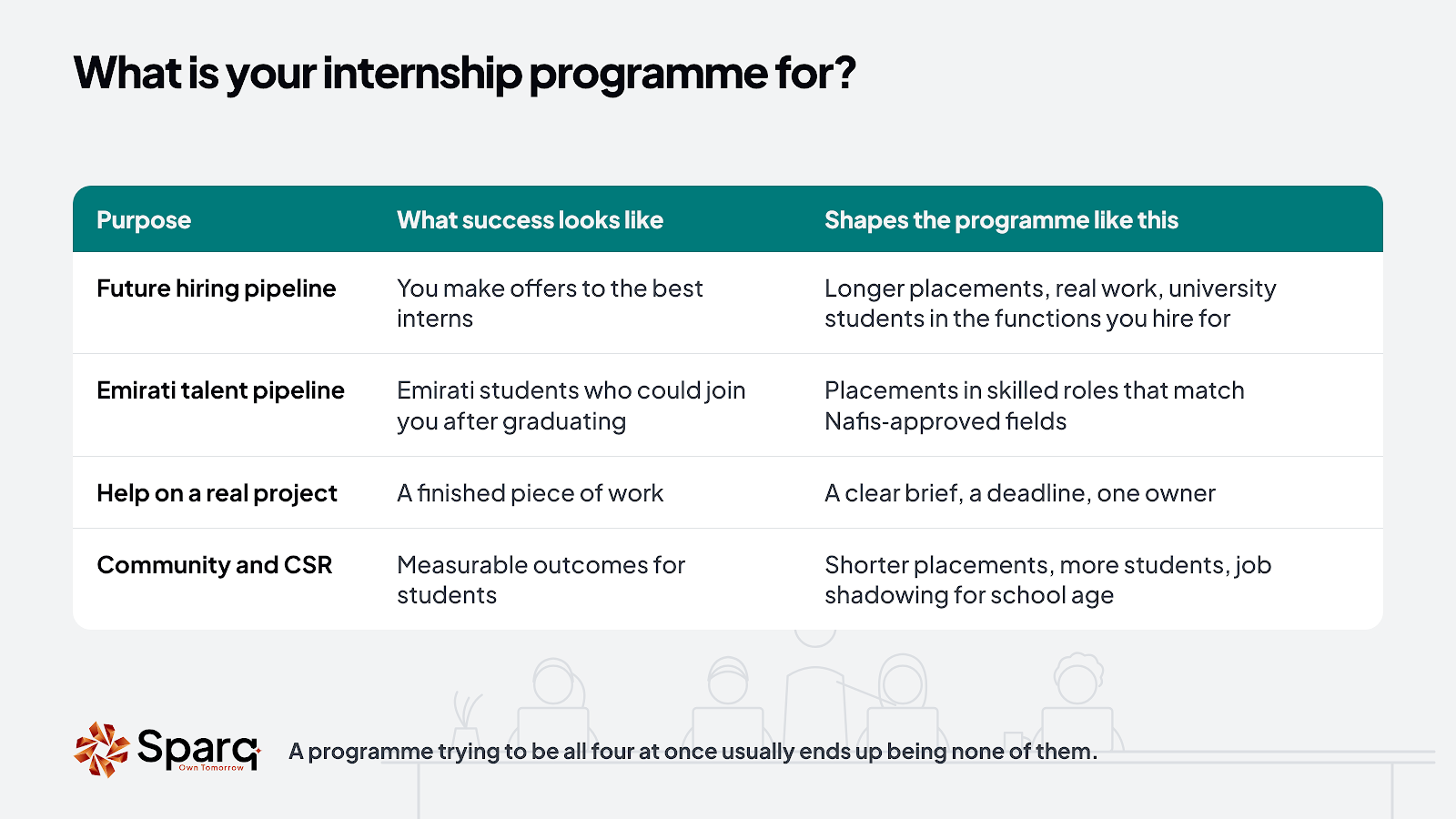
Pick one main purpose. Everything else, from who you take to how long they stay, follows from it.
A program trying to be all four at once usually ends up being none of them.
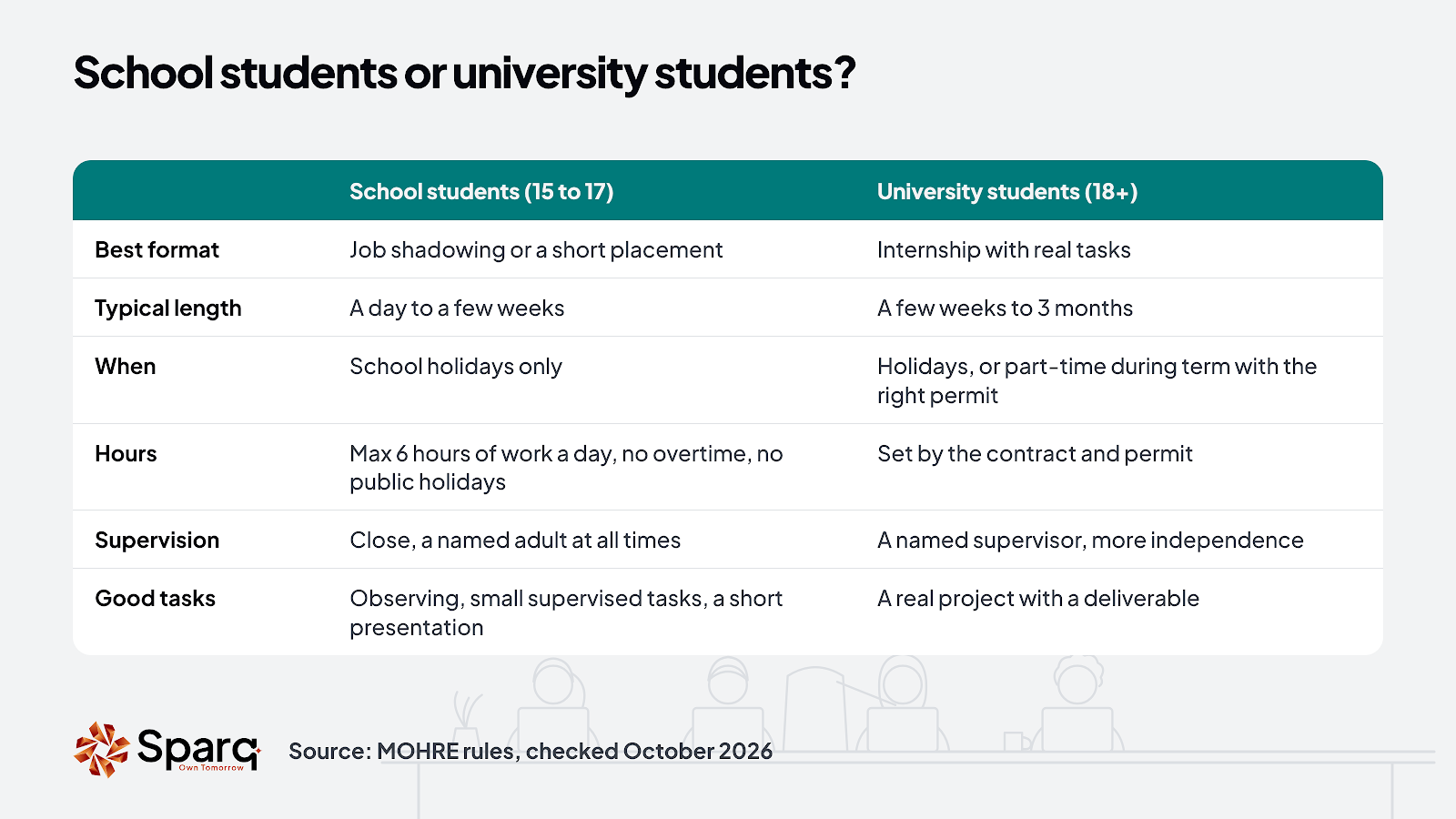
3 School students or university students?
Both work. They need different set-ups.
If this is your first programme, start with two or three university interns in one team. It's easier to get right, and you'll learn what your managers can actually handle before scaling up.
4 What paperwork does a UAE internship need?
The company applies for the permit and pays the fees. That's you, not the student.
For school students aged 15 to 17 (student training permit):
- Written consent from a parent or guardian.
- A no-objection letter from the student's school.
- Emirates ID, proof of student status and, for expat students, a residence visa copy.
- A written contract covering the work, the training areas, hours, duration and any pay.
- Placements during academic holidays, up to 3 consecutive months at a time.
For university students:
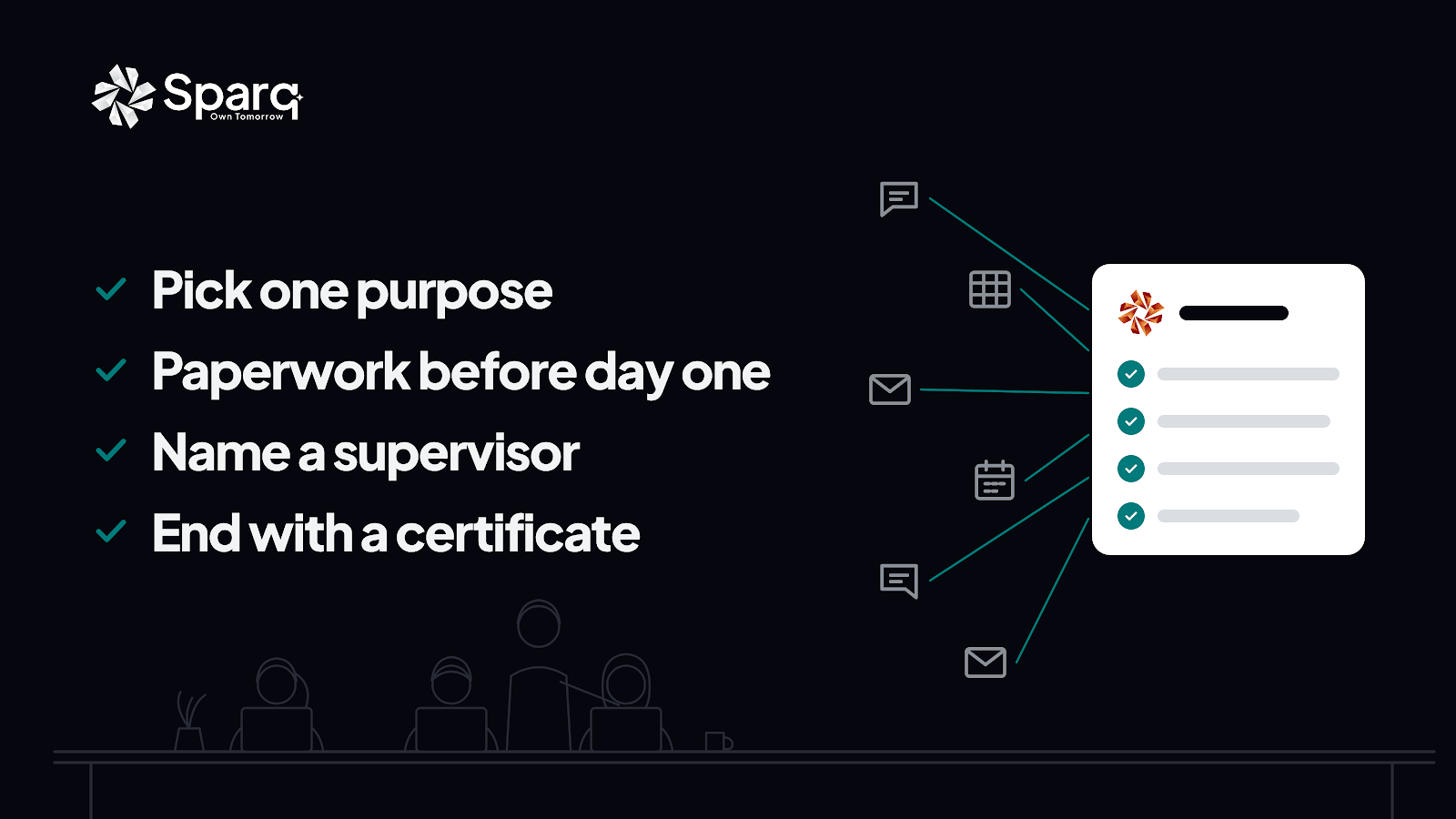
- For expat students, a MOHRE work permit before they start, whether the internship is paid or not. Emirati students follow different rules, so check with MOHRE.
- For students on a university-sponsored student visa, a no-objection letter from the university.
- Never on a visit visa.
If you're in a free zone, your free zone authority issues permits and may have its own internship rules. Check with them before you advertise.
At the end of every student placement, you must give the student an experience certificate covering their responsibilities and a performance appraisal. Build it into the last week rather than leaving it to an email afterwards.
5 What should each week look like?
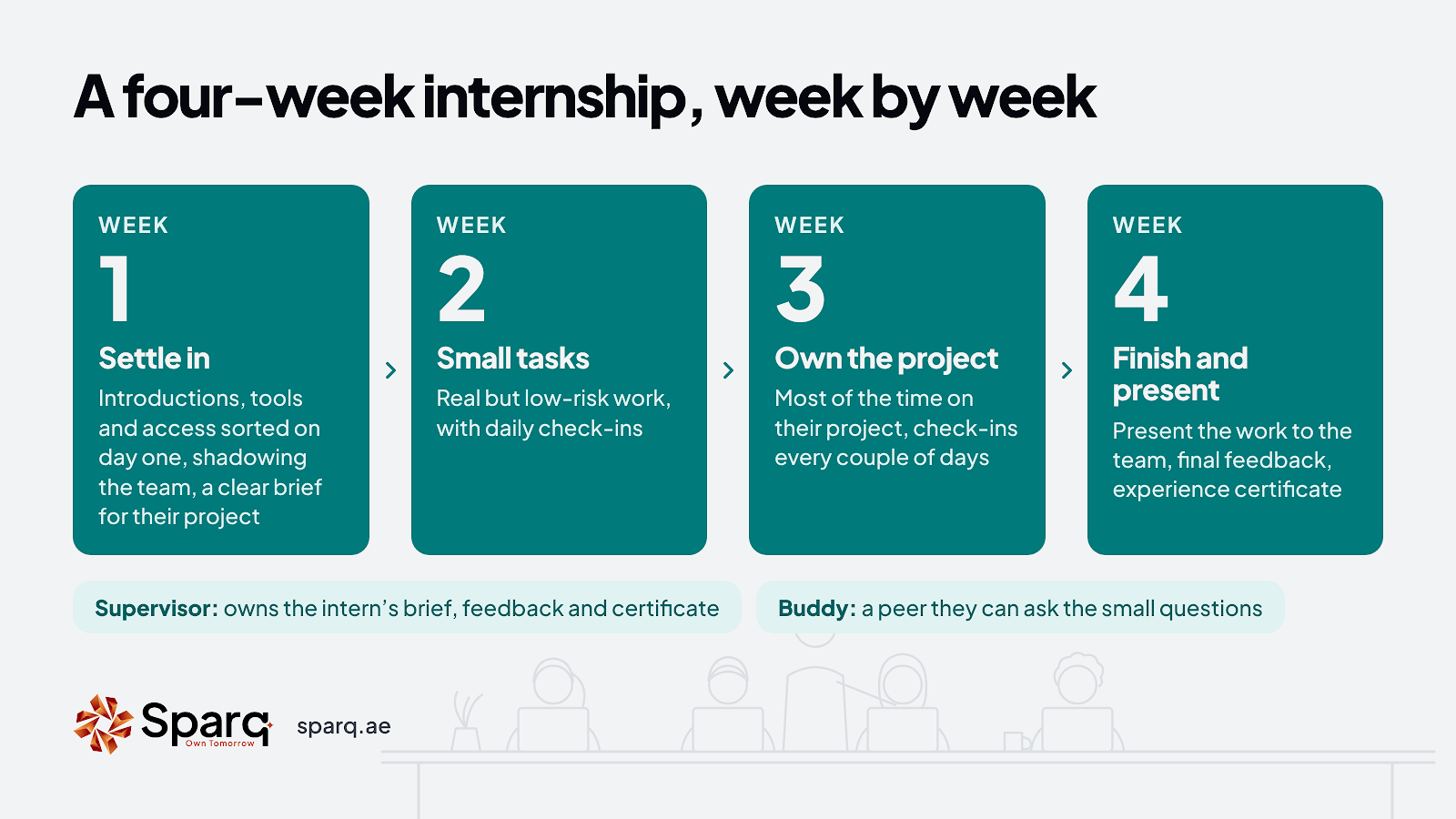
Here's a simple four-week shape that works for most university internships. Shorten it for school students.
Two roles make this work:
- A supervisor who owns the intern's brief, feedback and certificate.
- A buddy, a peer they can ask the small questions without feeling they're bothering anyone.
Block time in the supervisor's calendar before the intern starts. If supervision only happens "when there's a gap", it won't happen.
6 How do you give feedback interns can use?
Twice, in writing, and specific.
- Midway: one thing they're doing well, one thing to change before the end. Early enough to act on.
- At the end: what they delivered, where they grew, and what to work on next. This feeds straight into the performance appraisal on their experience certificate.
"Great job, keep it up" teaches nothing. "Your summary was clear, but lead with the number next time" does.
The same goes for applicants you turn down. A one-line reason costs you a minute and leaves a student with something to fix, and a better impression of your company.
7 How do you know it worked?
Decide what you'll measure before the program starts, based on its purpose.
- Pipeline: how many interns you'd hire, and how many accept.
- Project: whether the work was finished and used.
- CSR: how many students took part, how many completed, and what they said afterwards.
- Every programme: supervisor hours spent, and whether your team would do it again.
That last one matters. If your managers dread next summer, the programme isn't sustainable, however good the other numbers look.
8 Common mistakes
- No named supervisor. "The team will look after them" means nobody will.
- Busywork. Filing, photocopying and coffee runs waste the student's time and yours.
- Paperwork last. Starting an intern before the permit is issued puts the company at risk.
- Too long, too loose. A three-month internship with a two-week plan drifts.
- Nothing at the end. No presentation, no feedback, no certificate. The student leaves with nothing to show for it, and so do you.
9 How Sparq helps
Your internship programme today is probably a mess of WhatsApp, spreadsheets and email. Sparq replaces that with one platform.
- One-click programme builder sets up the structure of your programme, so you're not starting from a blank page.
- Profile Match score shows how well each applicant fits the role, so shortlisting doesn't eat a week.
- Assign to specialist interviewer routes a technical interview to the right person, not whoever happens to be free.
- Verified Employer badge tells students and parents you're a registered business, once you add your trade license.
School and university students apply in one place, and you can see every placement from application to certificate.
Book a demo by sending an email to contact@sparq.ae
FAQ
Do you have to pay interns in the UAE?
Not always. Student training placements for school students can be unpaid, though companies are encouraged to cover expenses. Whatever you agree must be written into the contract.
Who applies for an intern's permit?
The company. For school students, it's a MOHRE student training permit. For expat university students, a work permit. Free zone companies apply through their free zone authority.
How long should an internship be?
Long enough to finish something real. For school students, training placements can run up to 3 consecutive months during holidays. For a first programme, four weeks is a manageable start.
Can a free zone company host interns?
Yes, under its free zone authority's rules and permits. Check them before you advertise the role.
Do we have to give interns a certificate?
For student training placements, yes. The company must issue an experience certificate covering the student's responsibilities and a performance appraisal.
How many hours can a 16 year old intern work?
Up to 6 hours of actual work a day, with at least an hour of breaks, no overtime, no public holidays and no night work in industrial settings.
Sources
Checked on 13 October 2026. This is general information, not legal advice. Confirm with MOHRE or your free zone authority before your programme starts.
- Khaleej Times: Internships in UAE, work hours, age, job restrictions (student training rules: documents, hours, 3-month limit, experience certificate)
- UAE Government portal: Legal provisions for employing minors (juvenile permits, night and hazardous work)
- Gulf News: Summer internships in the UAE, what students and parents need to know (company applies for and funds the permit)
- Khaleej Times: Know the law, can I work in UAE on a visit visa (work permits, university NOC for student visa holders)
- Khaleej Times: Rights, duties of interns are clearly defined under law (free zone internship rules differ)